“I make small stuff.” A conversation with Ryan (what_thehell)
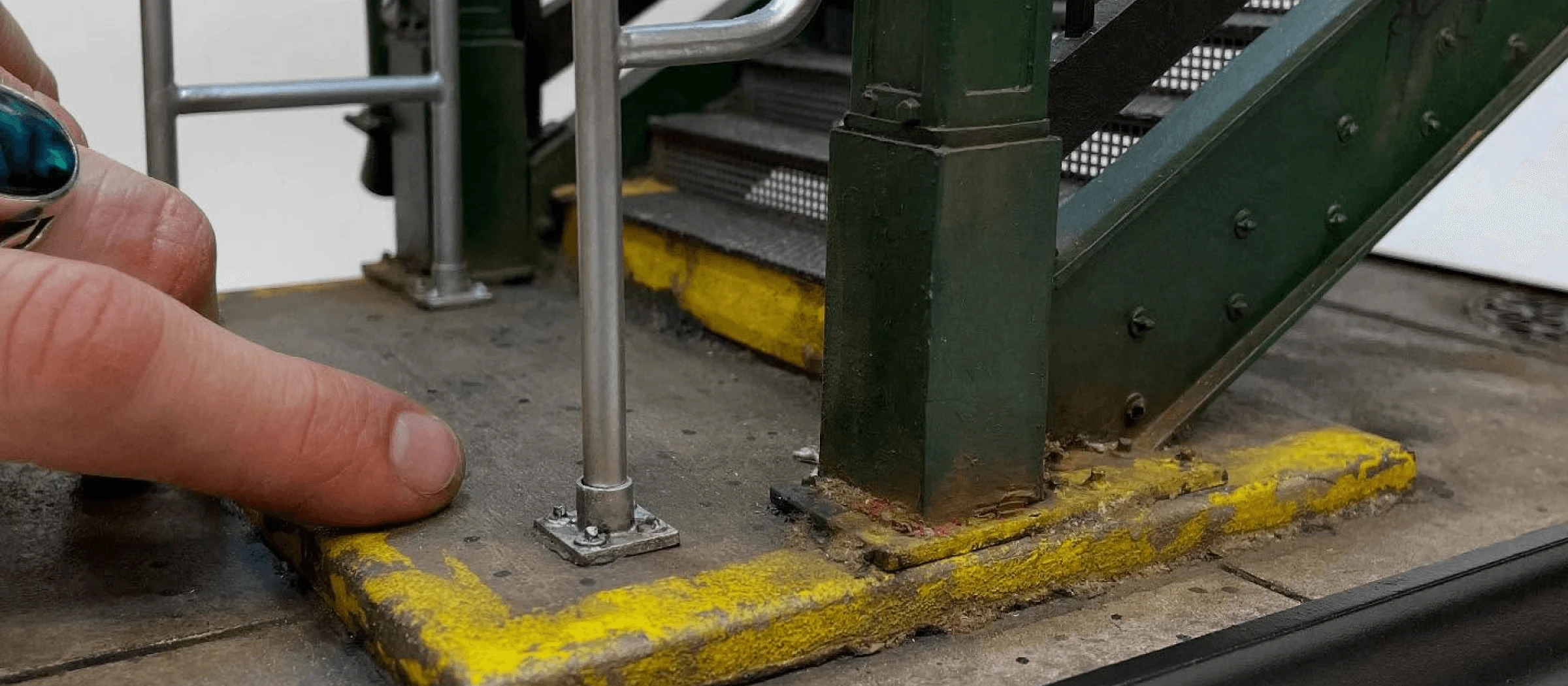
I lightly edited the text for readability. Ryan’s answers are quoted exactly as he wrote them.
If you ask Ryan to describe what he does, he doesn’t dress it up. No long labels, no genre talk. Just: “I make small stuff.”

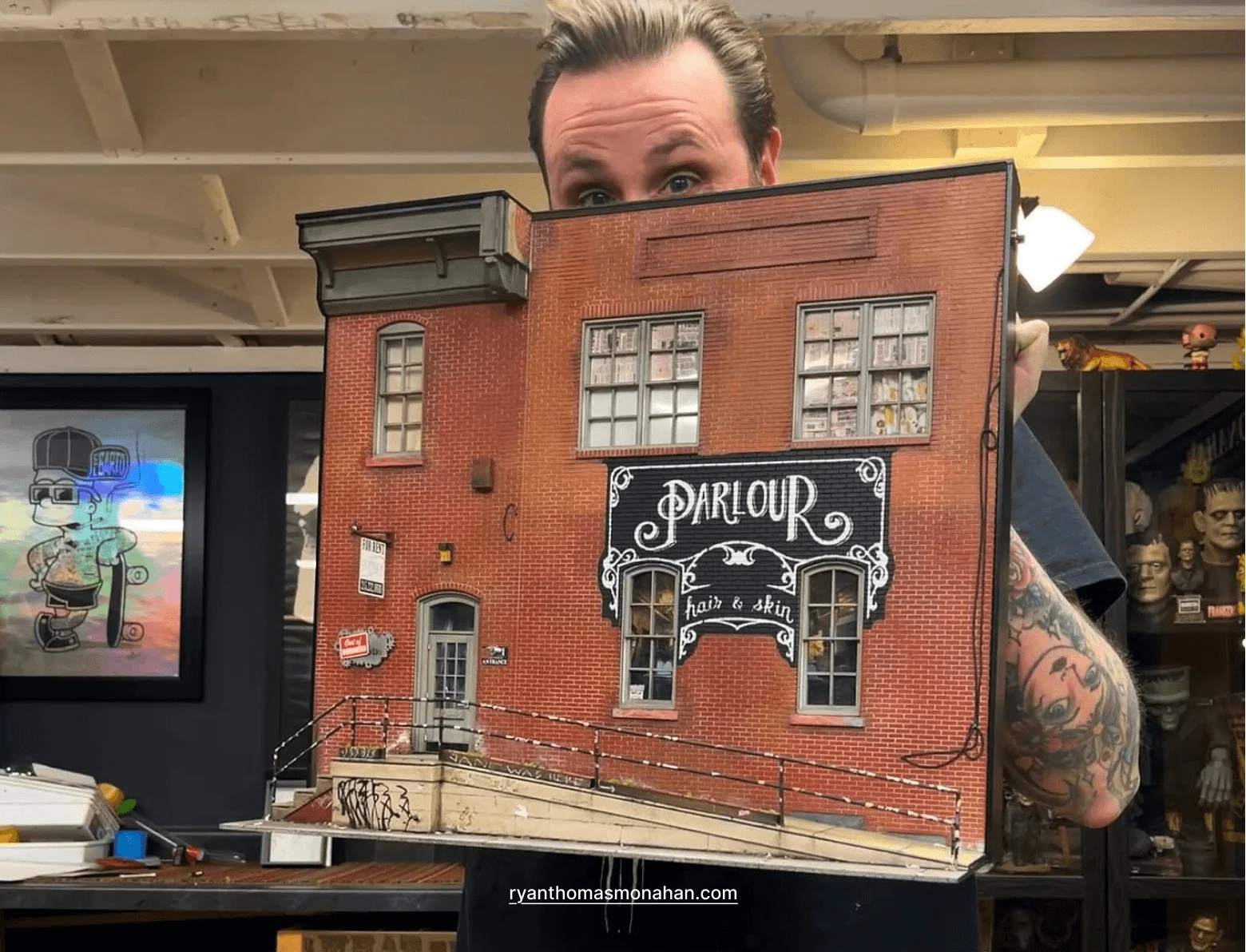
When people call miniatures “cute,” he doesn’t push back, and he doesn’t take it personally either: “im not offended by anything anymore ha.” It’s a small answer that says a lot — he’s not interested in policing how people react. He’s interested in building worlds that feel convincing on their own terms.
If his work were a movie genre, he’d call it “a detailed mockumentary.”

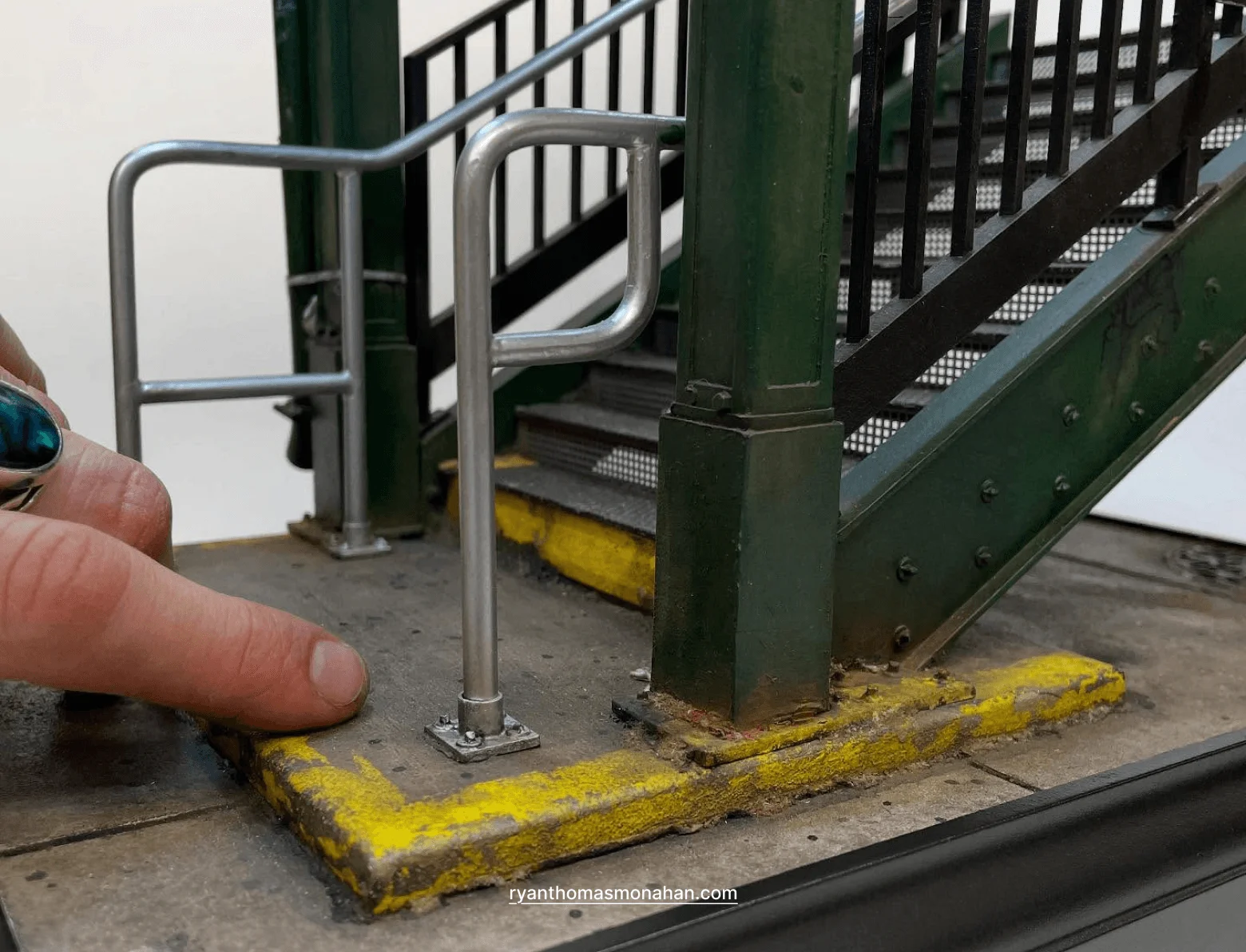
That choice makes sense when you look closely at what he’s drawn to: storefronts, facades, and places that look like they’ve been lived in. As he puts it, “i just love the layers of details and characters older buildings have, the traces of prior tenants and what not.”
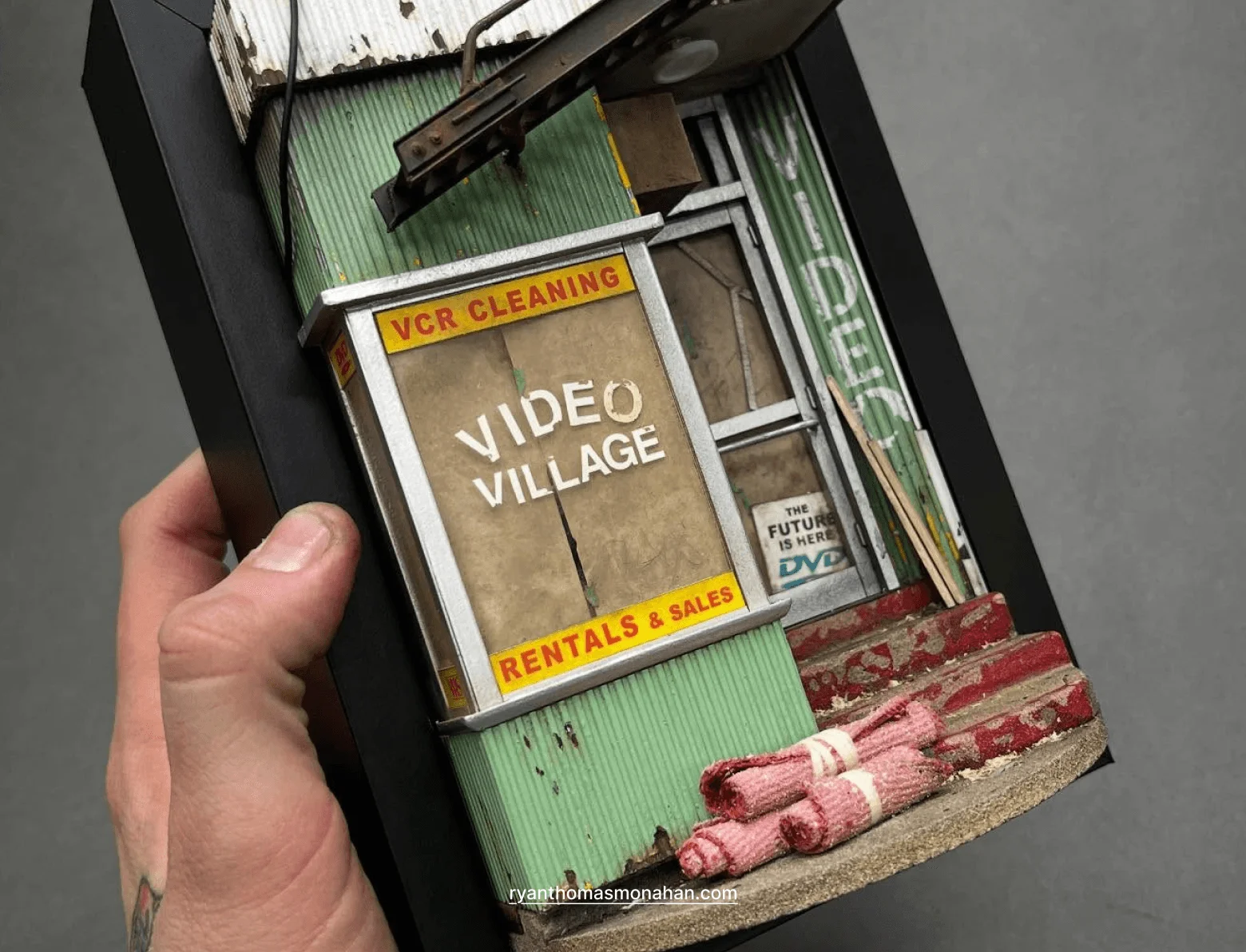
The “layers” are the point — surfaces that show time, change, and history, even when the scene itself is invented.
And invented is exactly what he prefers. Rather than strict recreations of real locations, Ryan says, “i prefer to make up fictional spots.” The goal, at least in his own words, isn’t documentation. It’s something closer to building a believable place with its own internal logic.
On subject matter, his only real line is simple: “not really,nothing hateful i suppose.” Otherwise, he treats the work as a whole. When asked what matters most — typography, signs of age, composition, lighting — he answers, “all of it really.” It’s not one trick. It’s the combination.
His starting point can be almost anything: “can be any of the above, most often a found object or a ref image that creates an idea.” Sometimes an object leads, sometimes an image sparks the direction, sometimes a story shows up later. But he does like to prepare before committing — “i usually do some prep and sketching on paper.”
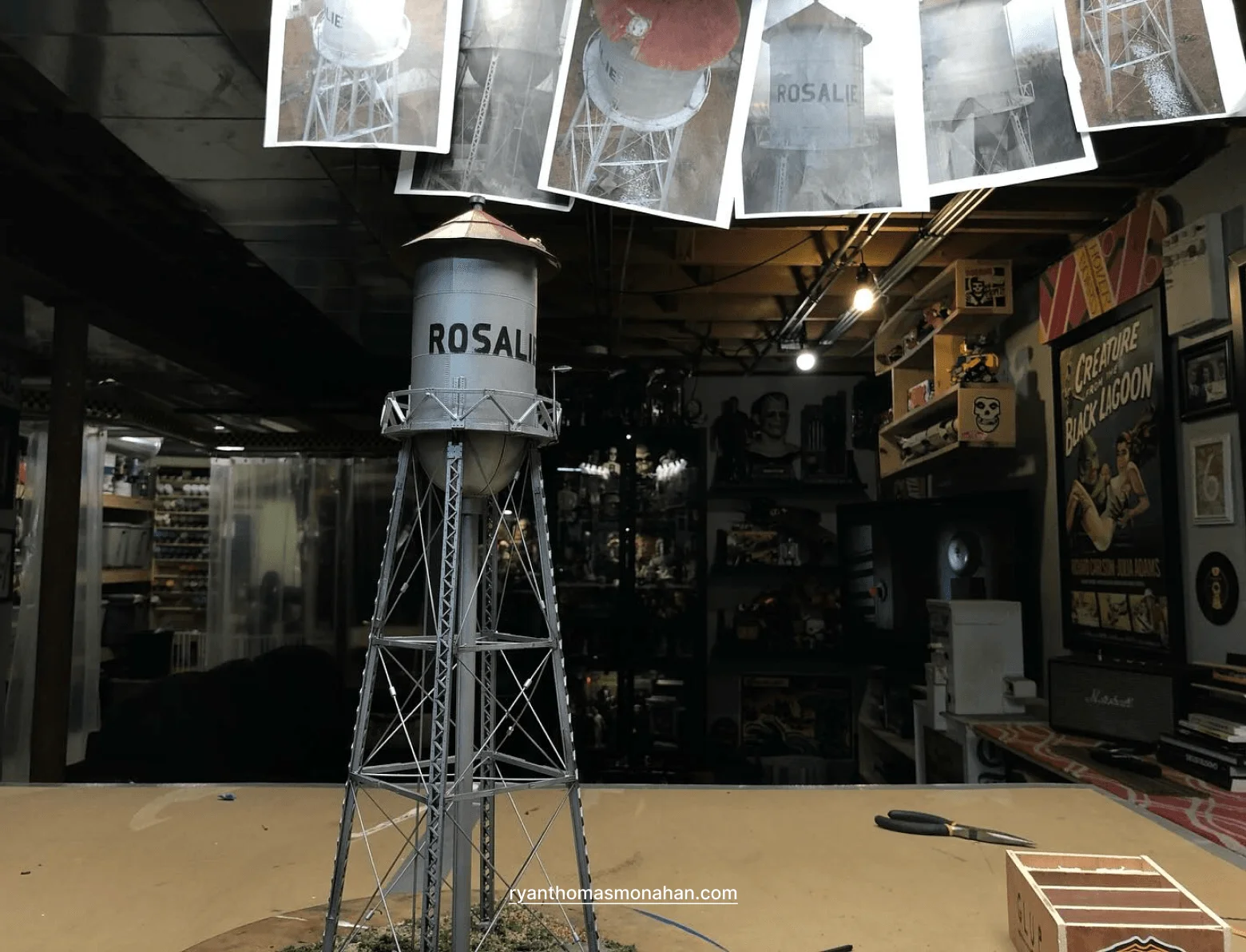
He also has a clear filter for whether an idea is worth continuing. “pretty quickly, if im not having fun i will drop it fast.”

No romantic suffering, no forcing it. If it stops being enjoyable, he lets it go.
In terms of how he builds, Ryan tends to keep things in-house: “i usually make everything in house myself.” The most time-consuming part isn’t the tiny details, though — it’s the foundation: “getting the main structure planned and created.” The structure sets the piece up; everything else depends on that planning holding together.
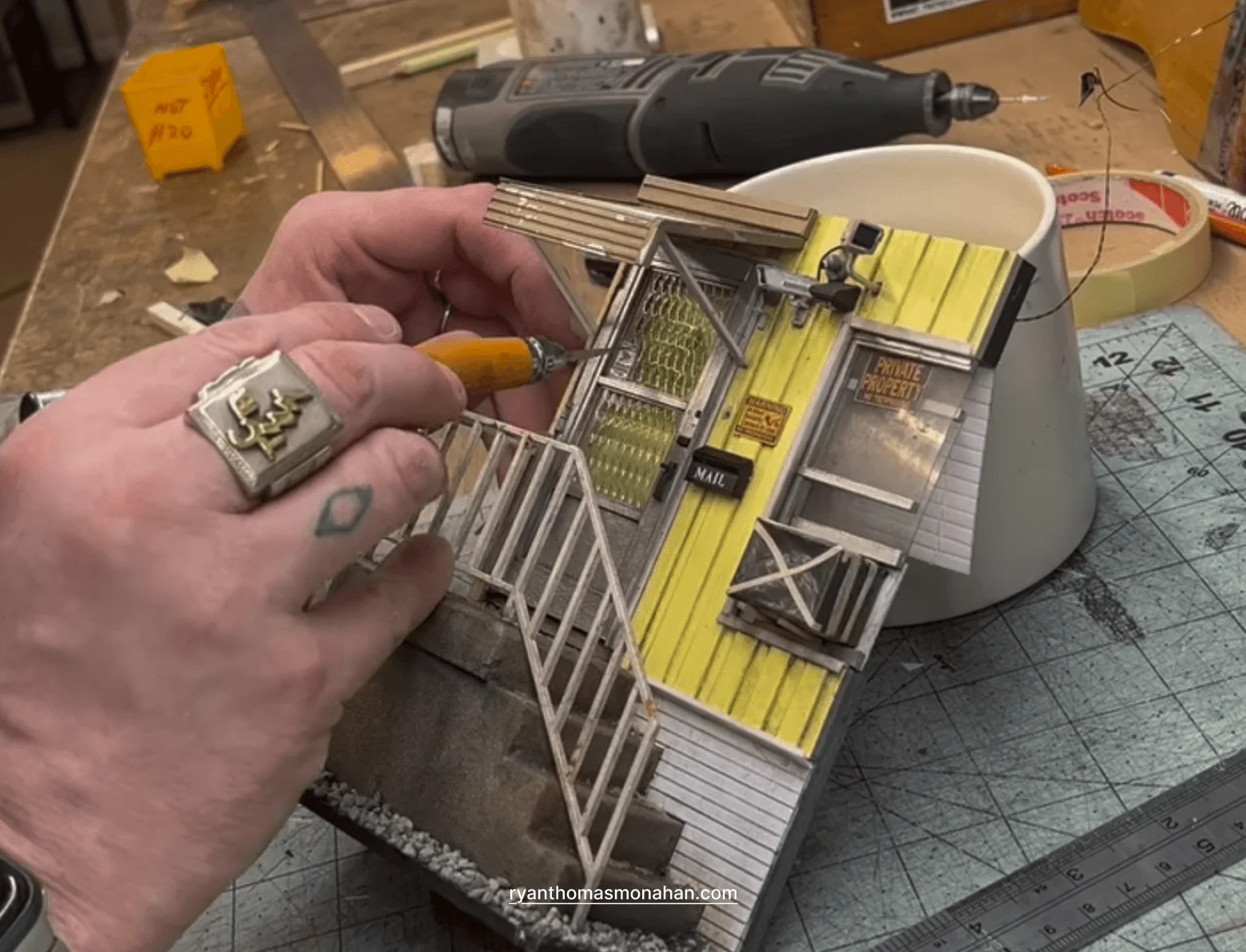
When it comes to materials and surface realism, he doesn’t claim a universal recipe. Asked whether he follows a single principle across textures like wood, concrete, and metal, he says, “not really.” What he does aim for is density of surface information: “i do however try and have plenty of textures in each piece, that adds authenticity to the work.”
And authenticity is the word he keeps coming back to. If he had to name the main ingredient of realism, his answer is: “genuine authenticity.”

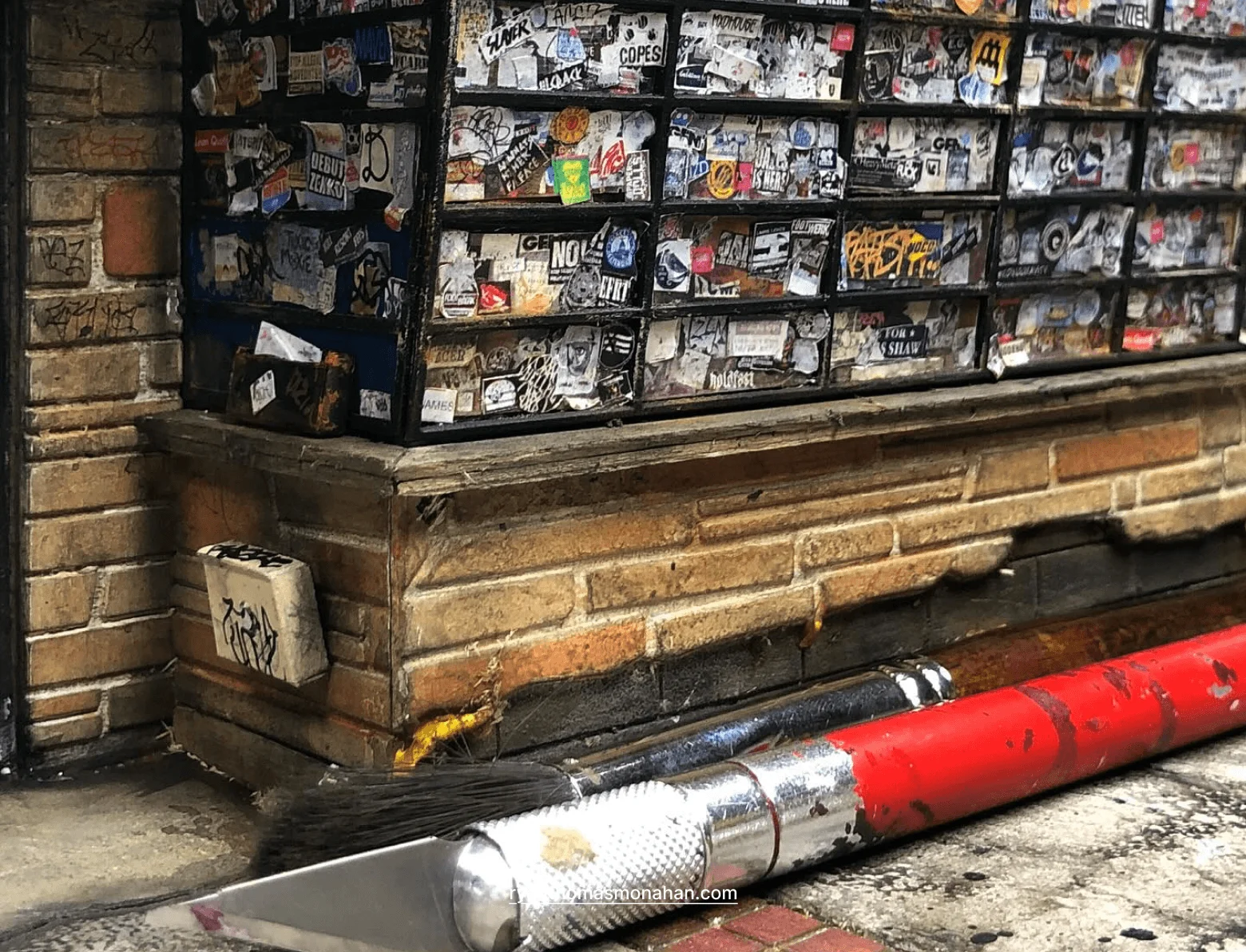
Not a specific effect, not one technique — just a standard he’s chasing.
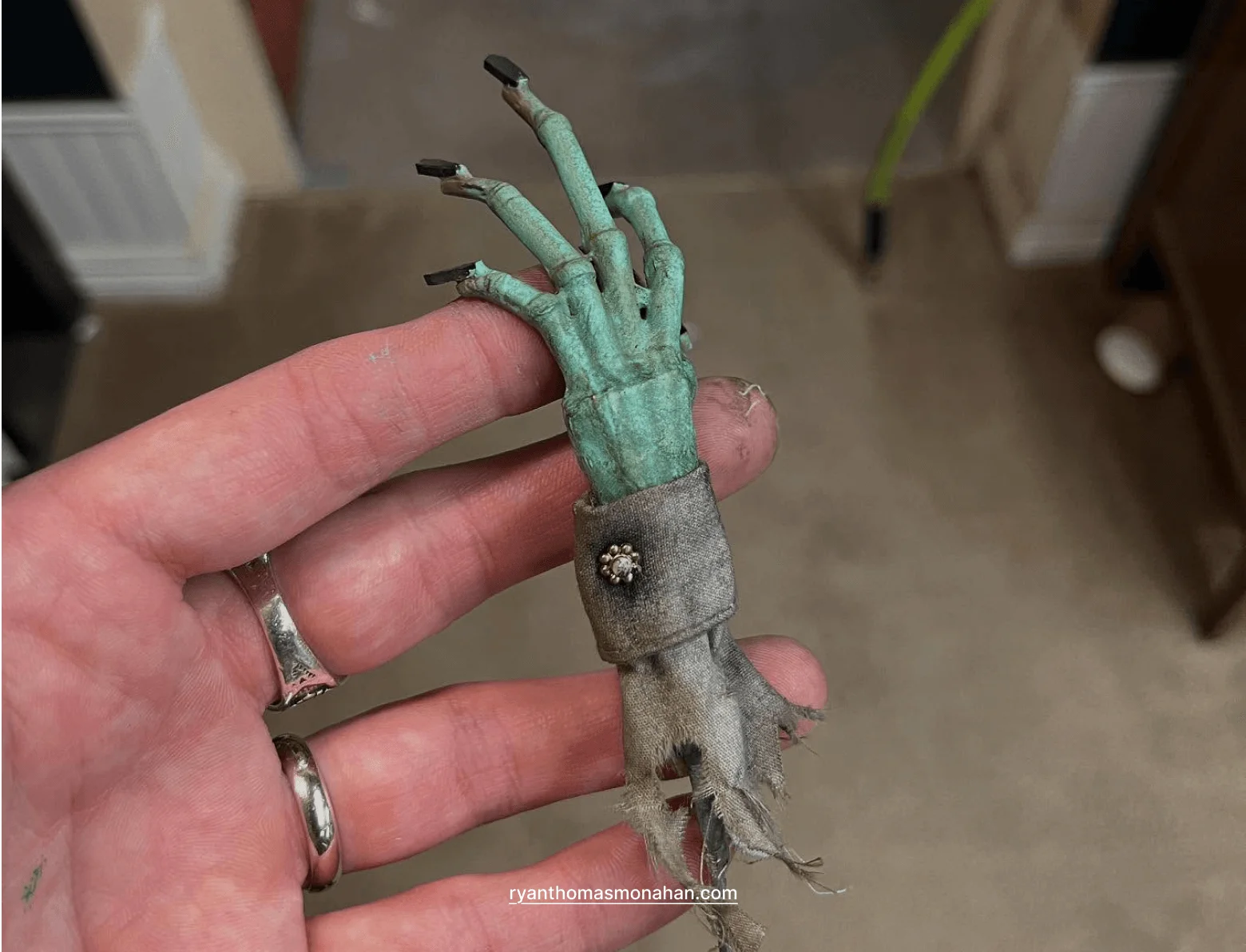
Imperfections are part of that, but not as a gimmick. They come from both intention and accident: “a combo of both really, i do make those types of choices but usually they are dictated by mishaps and other changes along the way.” In other words, the piece evolves, and the evolution leaves marks.
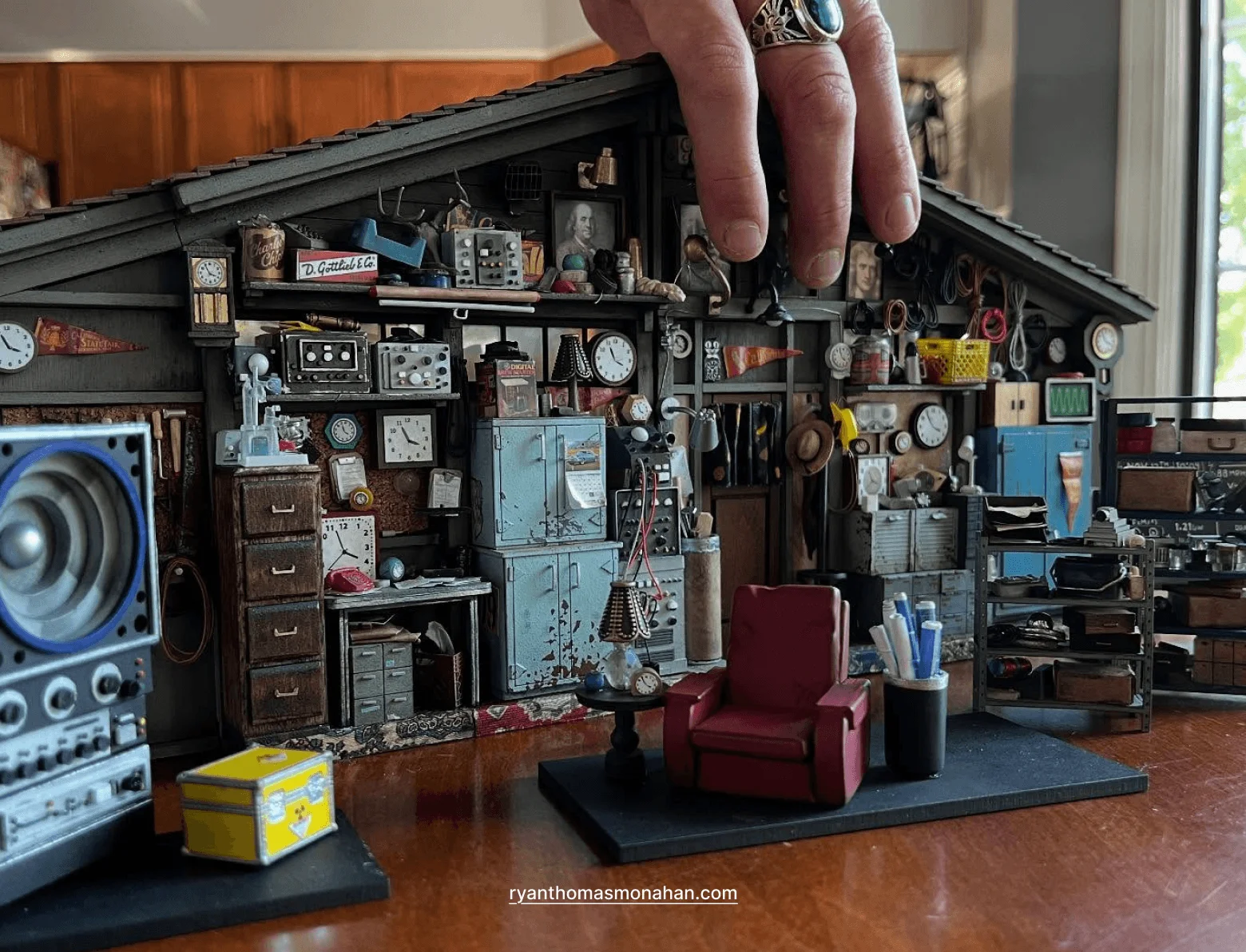
As for story, he doesn’t always build with a strict narrative in mind: “usually along the way, if at all.” But if there’s one emotion he wants the viewer to walk away with, it’s clear: “nostalgia.” Even then, he keeps a certain distance from the finished work: “not really, im really good at not getting attached to artwork.”
On commissions, he’s happiest when he’s given room to invent. “i really love when im ask to make something up from my own imagination,” he says. “i like recreating things but when i get to make my own path i really enjoy that the most.” He turns down requests mainly when he knows he can’t hit his own bar: “i try and only turn down work i know i cant do to my standards,” and he handles it simply: “i usually just explain it honestly.”
To quote a project properly, he just wants the client to bring as much clarity as possible: “yea as much info as you can! an idea to start with.” Pricing, he notes, has “lost of variables” — multiple factors move it. And to avoid end-of-project surprises, he tries to over-communicate: “i try and give plenty of details and info on the project, the process, the timeline and the final product to avoid any issues in the end!”
Looking ahead, he wants to try a different direction entirely: “i would love to try and some other genre , like fantasy stuff, castles and such.” His dream project, if time and money weren’t constraints, is personal: “id love to do a full model of my home and yard. i do hope to do it someday.”
And if someone wants to start making miniatures but is afraid they won’t be able to pull it off, his advice is blunt and practical: “nonsense, just start playing around. the best direction i can give is to just start.. if what you make sucks, pitch it and try again”
https://www.ryanthomasmonahan.com/
https://www.instagram.com/what_thehell/